|
Well, I'm sitting here on the side of the rode with my little's because my battery died. Sigh... We had a great day on a field trip to the local Locomotive museum in Cambridge Ohio with our church homeschool group.  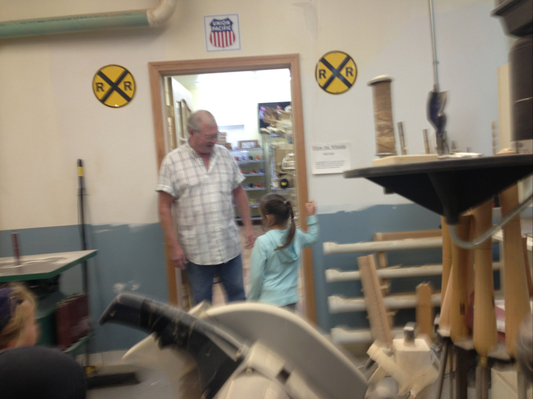 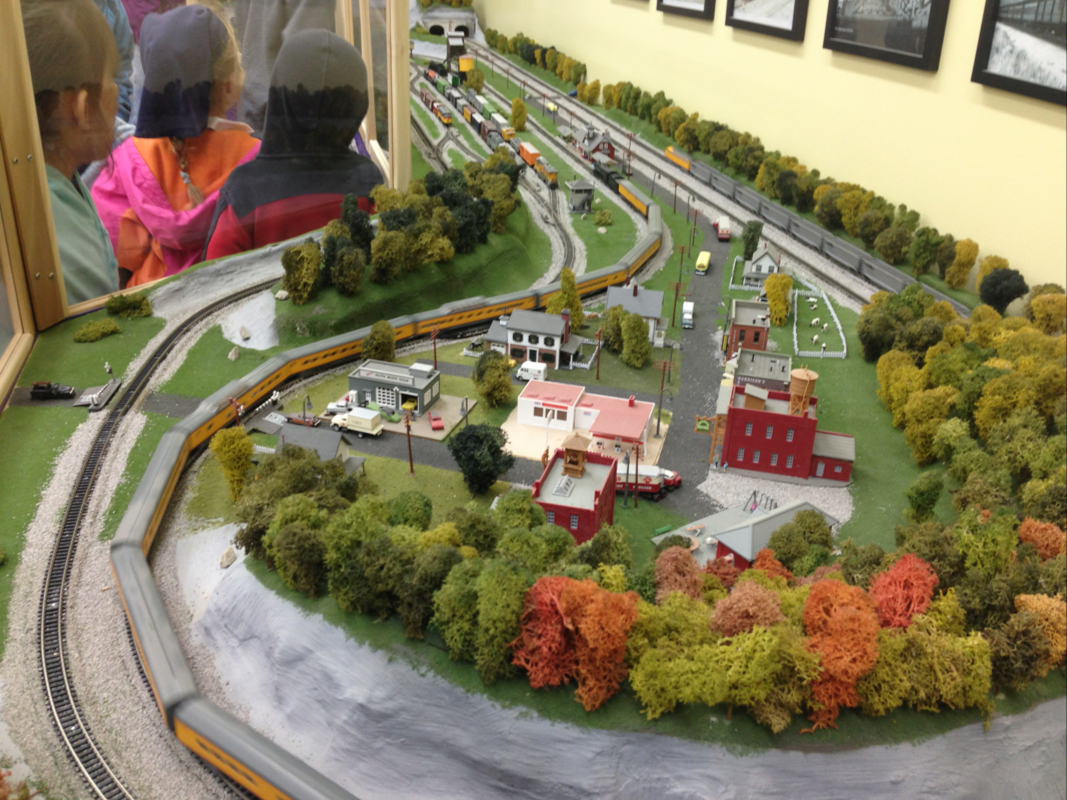 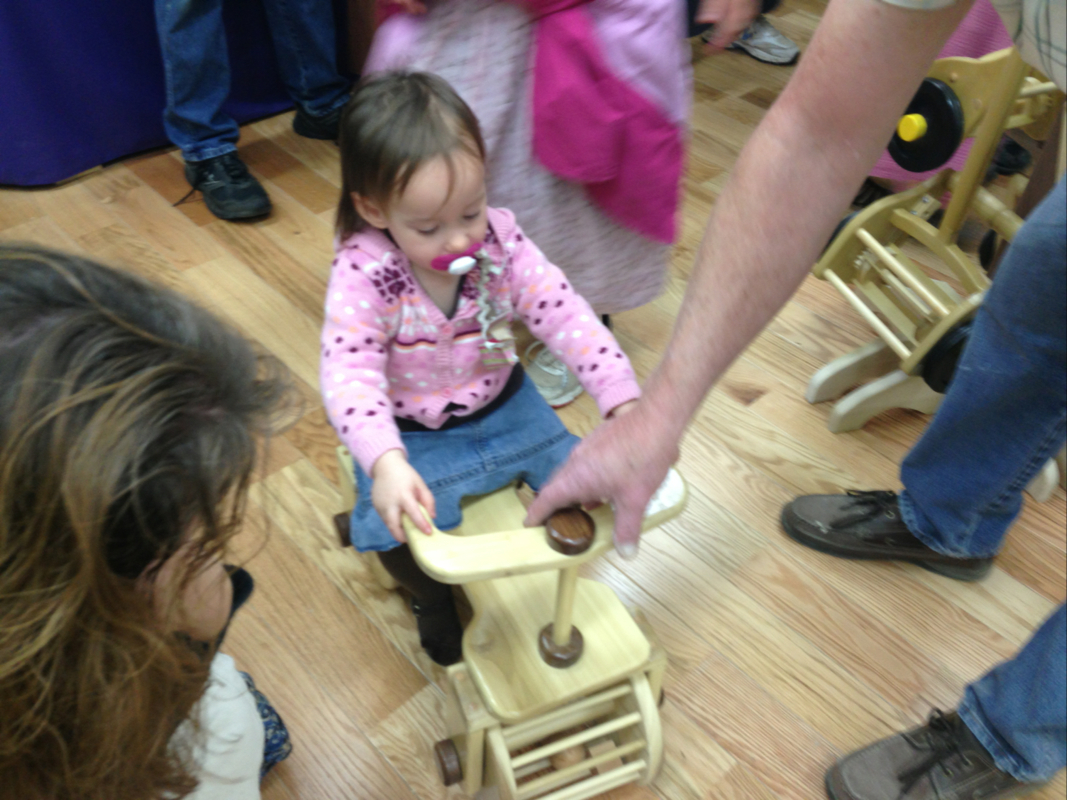 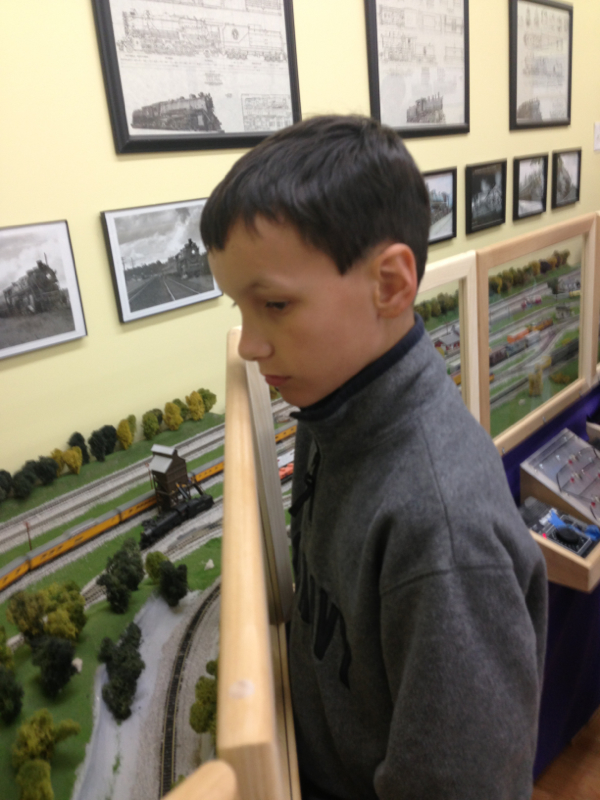 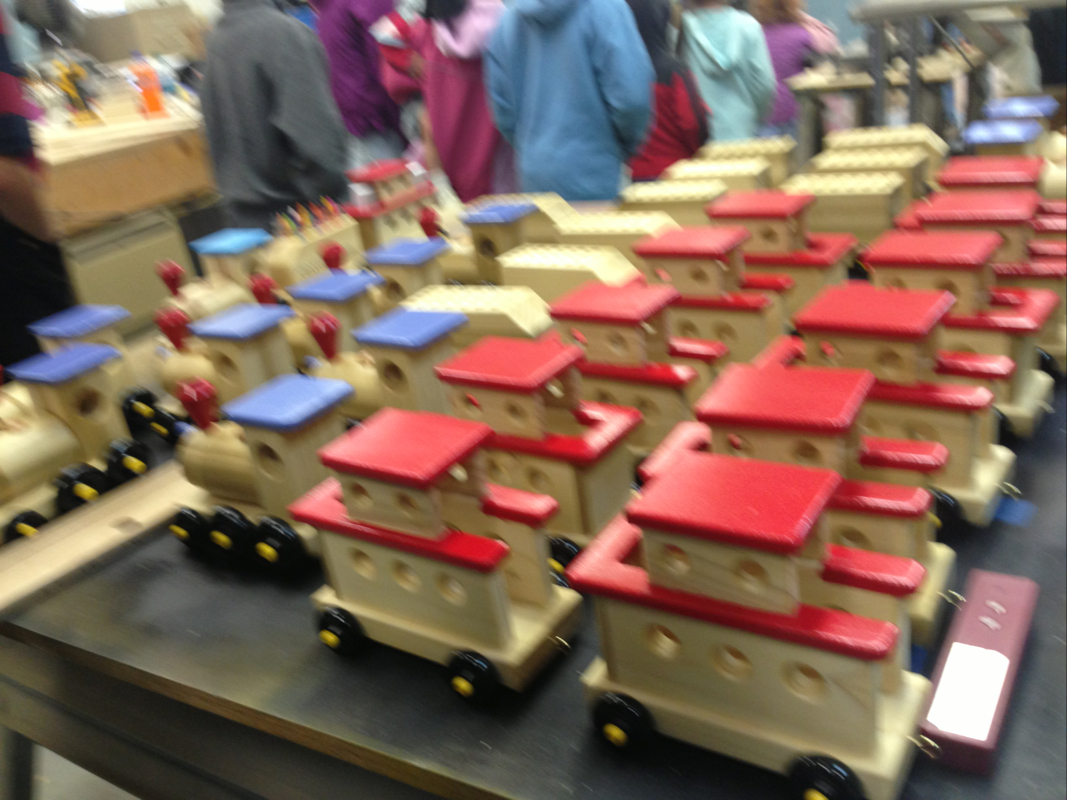 This man carved all of these trains. We learned about steam engines and how they were run.... Very interesting. He also made all these toys. Afterward we ate lunch at the Byesville park. This is a wonderful park that we had never been to before today. Why did I not know about this great place???   Just around the corner was a little museum that we toured about the town of Bysville, Ohio.   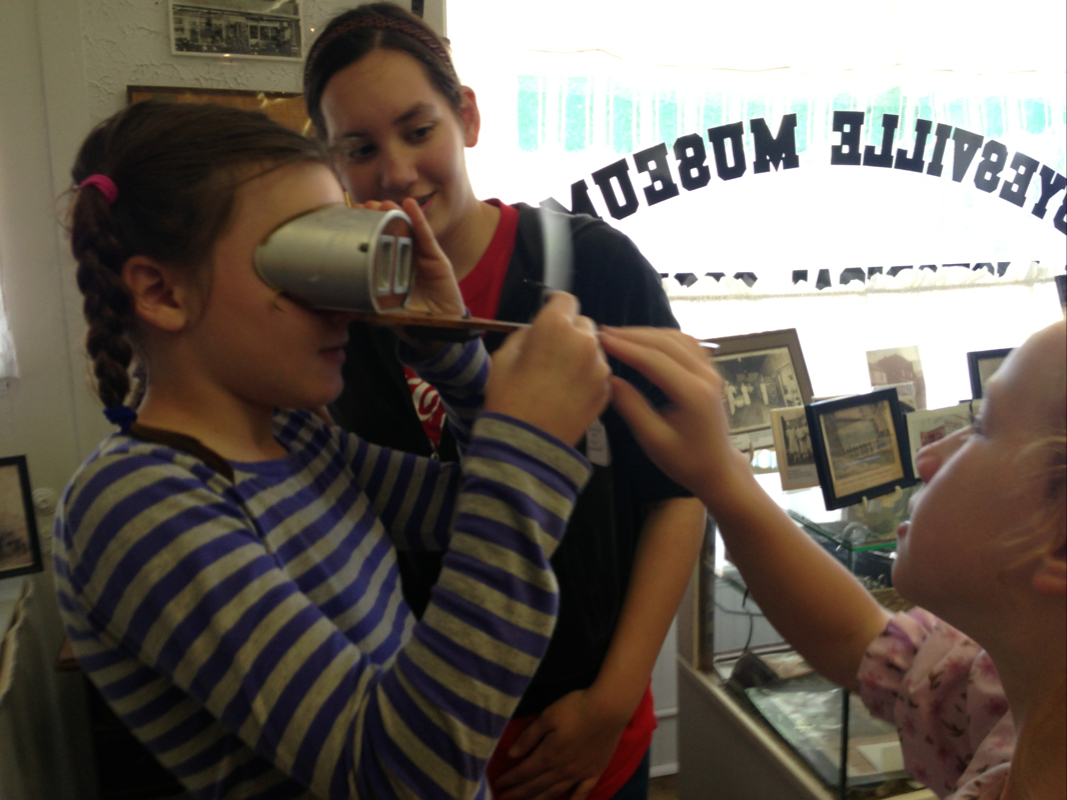 We had a wonderful time of education and fellowship.
As I started to leave, my van would not start... so here I sit waiting for a jump. :)
0 Comments
So, we made it through the second week of school! We're pretty much in our schedules now, I think. Nothing exciting has happened yet. I took a total of two Bible quizzes, 2 History quizzes, 1 Literature quiz, and I'm pretty sure that's all. I think I said I was taking Spanish this year and I'm starting to think in it too. Autumn and I were making lunch today and I went to get some banana peppers. I suddenly had this thought: caciendo. I was wondering why in the world I was thinking that when I realized it was Spanish for cook:-) I don't have any elaborate pictures or anything. Well, unless you count the First Day of School Pictures on the Second Day of School:-)
Carissa Faith :) Every year I see people take these great "first day of school" pictures and I feel guilty, because the first day of school comes and goes and I didn't get that picture. Sooo....this year I was determined to get a first day of school picture. I did, kind of .... BUT...we will call it "First Day of School Picture on the Second Day of School" It took us over 3 minutes to get a good picture. This was my first attempt. I actually took video without them knowing it of "trying to get the picture". It seriously takes them FOREVER to stand still! LOL! I tried uploading it, but our internet said it would take 600 minutes..crazy!  This was better. 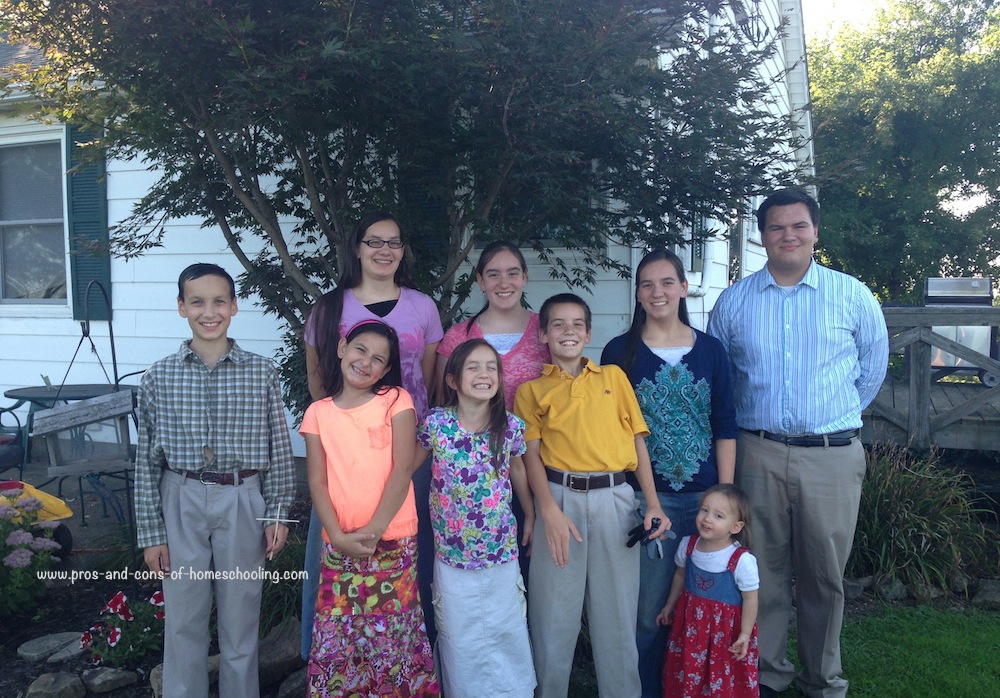 Well, we started our homeschooling Tuesday and it went pretty well. We start out with family devotions at 7:30 which I really, really, really love!!! One of the greatest advantages of doing this is that everyone's goal is to be dressed, beds made, and personal devotions finished before devotions start . I also love that Michael leads us in morning devotions. It puts us all on the right foot to start the morning. Charity woke up dry, so we put her on the potty before devotions. 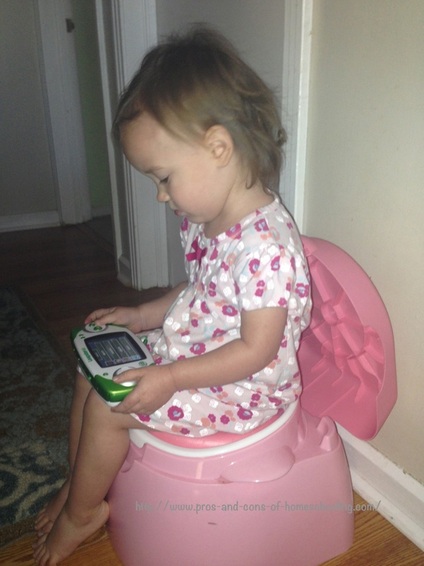 After breakfast, everyone is supposed to QUIETLY start school in the basement while Charity, Mercy, I run the vacuum and clean up the kitchen. When 7 kids go down to the basement QUIETLY does not always happen! :) After my little preschool and Kindergartner help me upstairs, then I get them started downstairs on their school. By the way, if you have small ones...let them help you vacuum, sweep, and clean up. It teaches them responsibility AND it keeps them out of trouble...messing up the entire house! This is where I found Charity after I got Mercy started on school. 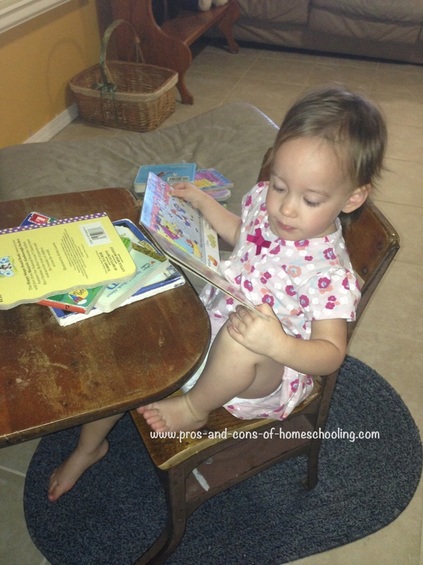 Mercy is writing in her Journal. Kindergarten! 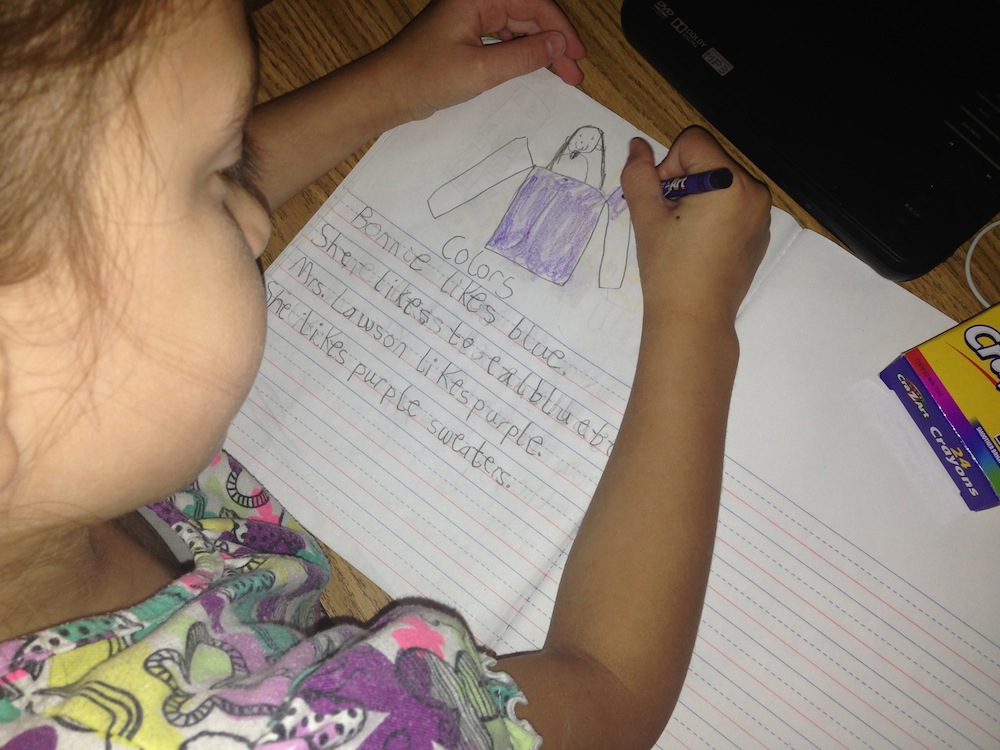 Serenity working in her handwriting. 3rd Grade! 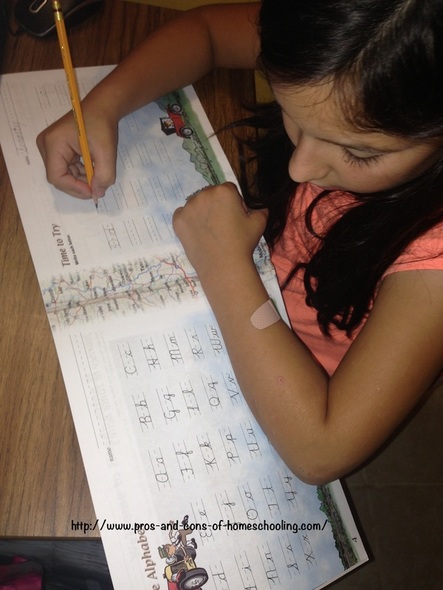 Can you tell Stephen likes to be organized? 4th Grade!! 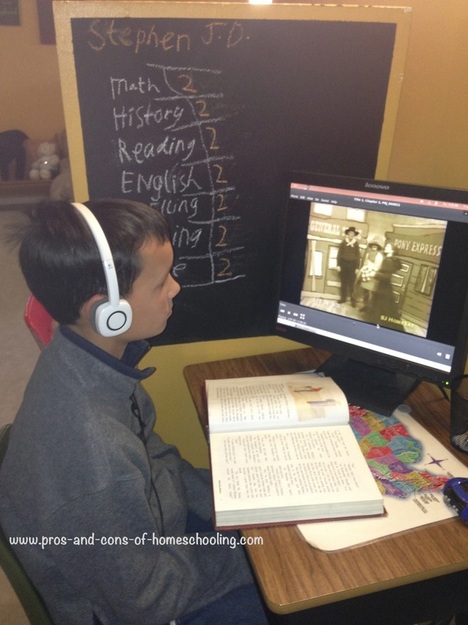 I'm teaching Timothy Life Science this year...7th grade!! 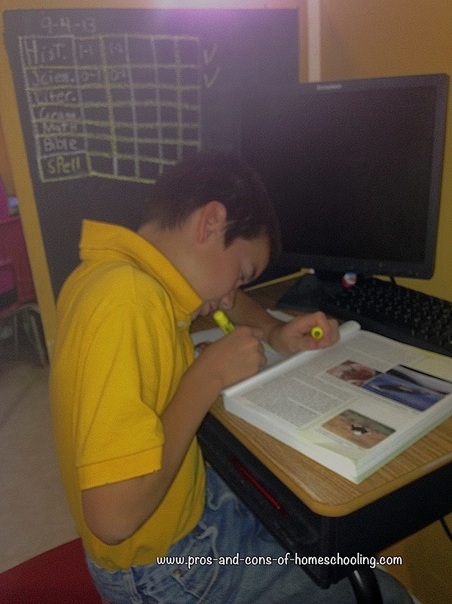 Carissa was trying to ignore me... :) 10th grade!! 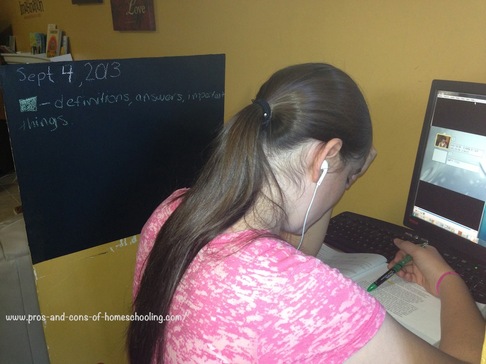 I interrupted Melody in writing her personification paragraph. :) 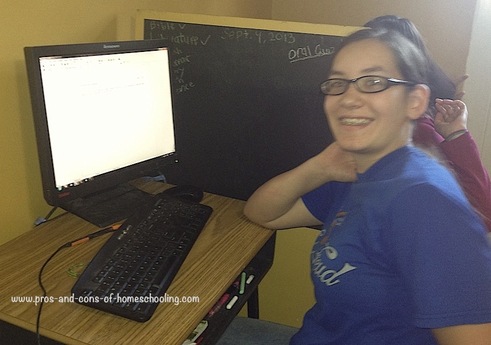 Sweet Autumn is in 11th grade. Hard to grasp that she will be graduating next year. 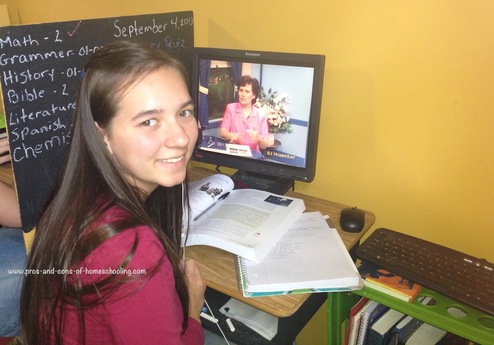 Happy School Year!
I'm scared. I'm frightened. I'm afraid. Why? I always get this way at the beginning of the school year. I am going to be brutally honest…I love homeschooling. I love the ability to teach my children and enjoy being not only their mom, but their teacher as well. We start on Tuesday. However, I find it overwhelming and feel the burden of school, meals, laundry, music lessons, new church year, and just being a mom coming crashing down on me. Every beginning of the school year a fear takes over me... a fear that I will fail as a teacher, a mother, and spiritual mentor. I have no one to blame, no one to complain to, no one to say it's not my fault...the bucks stops with me. Is my curriculum right for each child? Am I going to have the right attitude and correct spirit to help a frustrated child? Can I give each child what he/she needs? These are the thoughts that come into my head at the beginning of school. 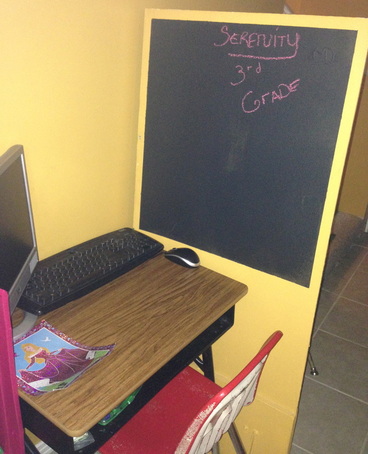 Serenity's desk and chalkboard 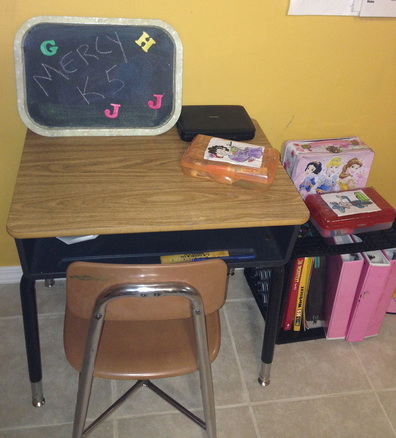 Mercy's desk and chalkboard Yes, I have the books, paper, their desks are ready and filled with newly sharpened pencils, colorful crayons, and chalk for those new personal chalkboard I made this year...all the school supplies they need for the start of a new year. But am I ready? The teacher? The mom? The wife? Going to a homeschool convention this summer, I met a lot of other homeschoolers many of whom were homeschooling for the first time. They had that look in their eye... Like they were trapped between excitement with the privilege of teaching their children and the fear of what to do, how to do it, and will they fail? Like a deer caught in the headlights in the pitch dark on one of our country roads! Homeschooling is not just that fuzzy feeling of having a clean house, the laundry done, breakfast ready for the perfectly dressed child, a clean kitchen after breakfast, school starting on time and you and the child sharing a book on the couch as the sun shines in through the window! :) It's the day to day living. The times when the house is not clean, the kids are fussy, it's raining, the laundry is not done, the schedule is messed up yet and school and learning still continue. The learning my children receive not only comes from the books, but more importantly, it comes from a life wholly dedicated to God. A life that shines the love of Christ when either the day is perfect or the day is out of sorts and the schedule is off. I want to be that mom that shines Christ. I want to be the teacher that loves God, shows God's love. I want to be the mentor that looks like Christ? How can I be that mom, teacher, mentor? Well, that brings me full circle to THE teachers edition, the manual for my life. God's Word You shall teach them diligently to your children, and shall talk of them when you sit in your house, and when you walk by the way, and when you lie down, and when you rise. Deu 6:7 1. I need to pray like Nehemiah... "O Lord, I beseech thee, let now thine ear be attentive to the prayer of thy servant, and to the prayer of thy servants, who desire to fear thy name: and prosper, I pray thee, thy servant this day, and grant him mercy in the sight of this man. O Lord, I beseech thee, let now thine ear be attentive to the prayer of thy servant, and to the prayer of thy servants, who desire to fear thy name: and prosper, I pray thee, thy servant this day, and grant him mercy in the sight of this man. " Nehemiah 1:11 2.I need to follow this pattern as Paul told the Corinthians: Let all your things be done with charity. (love)". I Cor 16:14 3. I need to walk worthy like Paul told the Ephesian people. ".I therefore, the prisoner of the Lord, beseech you that ye walk worthy of the vocation wherewith ye are called, with all lowliness and meekness, with longsuffering, forbearing one another in love; endeavouring to keep the unity of the Spirit in the bond of peace." Eph. 4::1-3 4. I desire to do as John says: "My little children, let us not love in word, neither in tongue; but in deed and in truth.".  This year as I seek with God's help to teach my 9 children Kindergarten to 12th grade, I go on my knees...
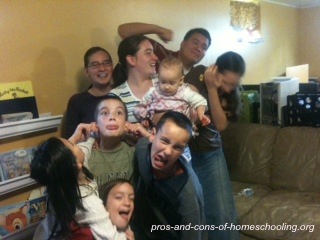
My very calm children! :)
Homeschooling is hard… There are real negative effects of homeschooling. Anyone that says otherwise has either never homeschooled or lives in a magical world where nothing ever goes wrong and the children always behave perfectly!
I think many homeschoolers will paint this wonderful experience of how glorious homeschooling can be… (and it really is great)...but when it comes down to it, the disadvantages of homeschooling can really pile up fast. This is coming from me...one who really, really loves homeschooling my children. As much as I entirely believe in homeschooling, people need to see the realistic negative effects of homeschooling as well. Of course, the cons of homeschooling are compounded when you have a large number of children to homeschool. Sometimes I feel as if I can not do homeschool another day. I mean really…the children are with me constantly from morning until evening and it is rare that I get a break. Especially when the children were little and I did not have built in babysitters, it was few and far between the times I got away by myself. I have to plan a quiet time during the day or find an hour in the evening to keep my sanity. Teaching 8 children, a grade range from kindergarten to 11th grade, has had its challenges. I have tests, quizzes, and papers to grade. My number 8 daughter needs to be taught her alphabet so she can learn to read; and it is necessary that my oldest son understands Chemistry that I can't even remember. (something about moles…I forgot that moles were not just animals; they exist in the science world as well! ) All the other children in between are in constant need of teaching, grading, checking papers, nurturing, and attention (as they should be). If you add the new baby in the mix…life becomes even more fun and the negative effects of homeschooling continue! In the mean time, I still have to feed 11 people for breakfast, lunch, and supper…AND clean it up again. Yes, I do have a chore schedule, and I try to stay organized with our stuff to do chore charts. But the bottom line is... that all the chores still need to be done along with teaching. It would not be good to have a clean house, yet children who were never taught "book learning". Obviously, if I am feeding them, then I need to go to the grocery store as well…(which is a whole other article on how many groceries we purchase!) Have you ever thought of when to do all that if you are busy all day teaching? :) Also, do you KNOW how much laundry accumulates with 11 people in the house? Let me tell you, you can get lost in out laundry! One particular day as I was folding a tremendously large pile of clean laundry, I reached in to fold a towel, and out popped the head of my number 4 girl…I literally jumped 10 feet, plus lost of year of my life. (She got a great laugh out of it and so did I after I calmed down.) If a 13 year old can hide in my laundry, you know it is larger that the average pile! :) Seriously, sometimes it can be difficult to keep up with every one having laundry cleaned, folded and put away in the proper drawer. The disadvantages of homeschooling can really pile up fast. I have to make sure I stay on top of the laundry by putting in a load in the morning, after lunch, and before bed. Somewhere in the day we fold, or I let it accumulate on the basement couch until our school day off. Do any homeschoolers get a shower before noon? My children have to be at the table at 7:30 am. They are expected to be dressed, bed made, room straightened, and pajamas put away…Now, if I was the perfect homeschool mom, I would shower and dress before they get up. BUT… to do that means, I have to get up way to early for this tired mama. Consequently, I get up at 6:30am to feed the baby, have my quiet time, beg God to help me start my day out with His Spirit, and meet my children in the kitchen for breakfast without a shower. Therefore, my shower is after lunch when the older children are doing projects and the younger are napping. (Plus I pray no one comes over until I shower! :) Although for some reason, as soon as I shut the bathroom door and get in the shower, I literally have 3-4 people knocking on my door wanting me for something they think is to important to wait! :) One particular instance, after the 5th knock, (and I am NOT exaggerating) I got out of the shower, threw a large towel around my slick soapy body, and stuck my head out the door. With a very Christ-filled attitude (sarcasm) I yelled, "LEAVE ME ALONE!" The children scattered like ants, and my husband (he's a Pastor), who was studying in the next room, poked his head out to ask if there was a problem. "No problem"! I replied, as I returned to my relaxing shower to rinse the suds off. Can you see the negative effects of homeschooling even in just getting a simple shower? Homeschooling can be extremely difficult on a marriage if you allow it. As we pore our lives into our children by teaching, training, and nurturing, we can often neglect our husbands. Relegating them down on the priority list to feeding the dog or cat. Many times it is unintentional because we are legitimately exhausted, tired, and many times grumpy. Taking our pressures and all our frustrations of the children on him, when all the poor guy did was come home, sit down in his comfy chair and relax after working all day. If we are not careful, the very thing we are striving to do…raising our family for the Lord…we tear down brick by brick by not following, respecting, and loving our husbands. I really try to put my husband first…I fail many times.. but I continue on because the foundation of our marriage is Christ and the foundation of our home is Christ. Now I could probably continue on... …but I think you get the picture of the negative effects of homeschooling. I tell people, homeschooling is not for everyone. I feel that a perfect picture of homeschooling is painted and people jump into teaching, when really it is harder they they thought…you truly need to count the cost. Despite all the negatives effects of homeschooling, for me, there are many more advantages of homeschooling. I really do love homeschooling. I love being the one to spent time with them: teaching, admonishing, loving, feeding, training. I really do count is a privilege to have the opportunity to not only train my little ones, but to really get to know my teenager as well. Many a conversation was started over the dishes and the laundry that I would not have had if I was not homeschooling.  A chore schedule is important to have! Let me explain... One morning, I woke up extremely sick, my older children, seeing the problem, followed our chore schedule and homeschooling schedules. When I entered the real world later in the afternoon, I smelled supper cooking, the house was clean, and the children were finishing school. Now, my children are by no means perfect...just ask those around us...but on this particular day with age appropriate chores, they followed our household chore checklist and homeschool schedule and the house did not fall apart!! :) Keeping the house running efficiently can be a problem, especially if you are homeschooling. If every member of the family works together, following a chore schedule, life can run a little smoother! Giving children a chore check list allows them to learn basic skills needed to run their own home, teaches basic housekeeping skills, and creates an atmosphere for great character building. To keep chores from seeming monotonous, come up with a colorful chore schedule that can be viewed at a glance to help them remember things that need to be done around the house!! 5 Reasons Why a Chore Schedule Is So Important for the Family.
My Family Example Weekly Chore Chart Sample Chore Checklist 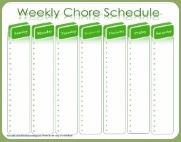 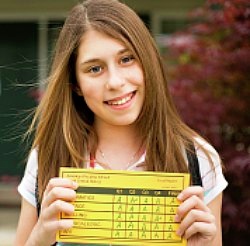 Homeschool Record Keeping Homeschool Record keeping does not have to be overwhelming! However, no one told me that when I first started homeschooling!
How was I to keep all my children's homeschool records? What records do I need? How was I to grade every paper every day? Tips for Keeping Good Records
If you are using a standard curriculum that includes tests and quizzes, simply calculate a grade based on your student’s work on those tests, quizzes, and papers. This is where homeschool record keeping comes in.. keep a notebook where you can record all the grades for each subject. At the end of each 9 weeks or 18 weeks, you simply add up all the total points missed for the tests,quizzes, and papers then divide it by the points possible to determine your child's grade. What I love about these charts is how easy this makes for recording grades. Plus, The child and I know exactly what they missed right away, making it easy for them to understand what they did wrong. Free Down-Loadable Homeschool Recording Sheets for every subject! Choose between Girl or boy Sheets Boys: Bible English Math Reading Spanish Handwriting Science History Girls: Bible English Math Reading Spanish Handwriting Science History How It works...
if you are having trouble printing these links...go to homeschool record keeping. 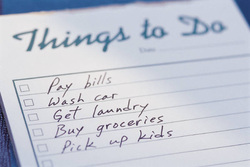 Are you looking for a good Homeschool Schedule that works for your family? Are you frustrated by not being able to "fit it all in?
Each home will have their own homeschool schedule that works just for that particular home. Looking at the guidelines of setting up a schedule is the best way to personalize your own. Just because one schedule works for one family, it may not necessarily work for another family. The best homeschooling schedules are tailored to the needs of individual families. Try these timeless tips... So let's get started! Homeschool Schedule Guidelines
In the real world, there is a time to get up and a time to go to bed. My biggest concern when I started homeschooling my children was that they develop good habits. My children learn from me, because I am their teacher and their mom!! No matter what they do in life, they will need the discipline to get up in the morning and to go to bed at a proper time.
Children need boundaries. I have found my children do much better when they know exactly what is expected of then.
In either case, it is important to now what days you plan on doing school and for how long... All year, 3 months on and one month off, or 9 months on and 3 months off. Check out your states laws here! Check out your state's laws here!
Some of my little ones take naps in the afternoon...put that in the schedule. My younger ones finish school earlier. This leaves me with more time in the afternoon to help the 4 older children and do music practice.
In my schedule, I try to do all the cleaning and vacuuming while my older ones are independently working on school. My preschool, kindergarten and first grade children (yes even my two year old) follow me around and help me clean. Check out age appropriate chores for preschool children. Then around 9:30, I start the younger ones on school.
But don't forget grocery shopping, doctor appointments, music lessons... Don't let these times change your schedule...just add it in.
Mom does less work if everyone is pitching in. In our household, everyone needs to be showered, dressed, hair brushed, bed made, bathroom clean,and room cleaned BEFORE breakfast. With five bedrooms, that is five less rooms I need to clean in the morning. This works for after school and before bed as well.
Then put how long each of these might take to accomplish.
On a before breakfast schedule: Certain chore or tasks are accomplished before breakfast...OR...Math, Science, and History or finished before lunch. Depending what works best for you is the type of schedule you pick. Now What? Sit down and create your unique homeschool schedule! It is important to have a schedule for homeschooling, yet be flexible, don't let the schedule control you. It is just a guideline to help you accomplish your daily tasks. Try many different schedules to find the one that works best. In the end, your hard work will pay off and everyone in the home will be happier for your time and effort! Return from Homeschool Schedule to Pros and Cons of Homeschooling |

AuthorGod reached down in love and rescued Cassandra from her sin at the age of 21: changing her life, purpose, and focus forever. Archives
February 2019
|
 RSS Feed